
Elevating Customer Service in our Busiest Season
When files are piling up and timelines are tight, it’s natural for priorities to shift toward managing immediate demands. In those moments, customer service can receive less attention, not because it isn’t valued, but because time and capacity are stretched. It’s worth remembering that customer service is not just for the benefit of applicants; it’s also a tool that building departments rely on. Clear, timely communication reduces follow-up inquiries and the need for resubmissions, helping files move more efficiently. As workloads increase, customer service becomes more important, not less.
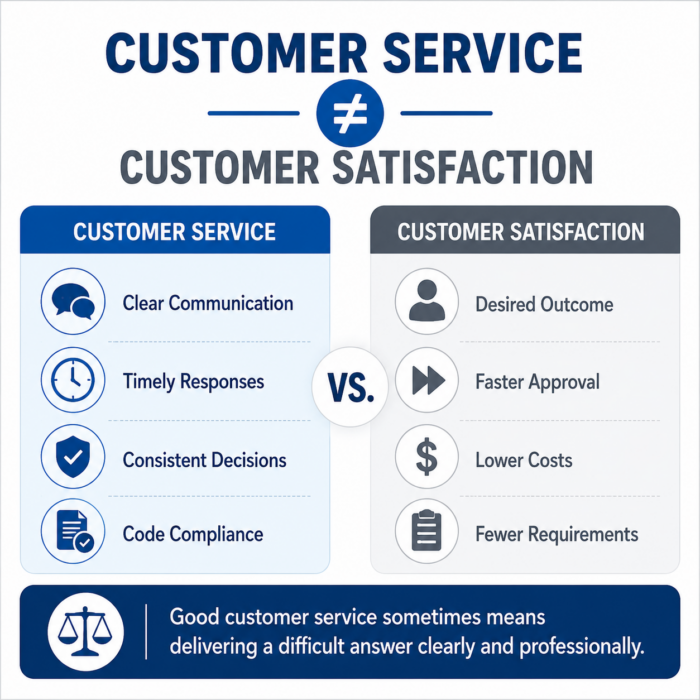
One of the most important aspects of our role in a regulatory environment is understanding that customer service is not the same as customer satisfaction. Sometimes, great service is misunderstood as prioritizing satisfaction over safety, or as being flexible where flexibility is not permitted. Good customer service can mean saying no, but it must be delivered correctly.
I was a new building official when I learned my first lesson about this. I was given a small deck to review, and as often happens, the proposed foundation for the deck did not fit nicely into Part 9. I promptly put together a deficiency list that indicated the deck foundation needed an engineer and sent it back to the applicant, who just happened to be a member of Council.
Clearly, this did not go well. They were upset that the design for their little deck was going to be more expensive than the deck itself and could not understand why the building department would require something so extreme. As a newbie, it felt like I was being hauled into the principal’s office, but in reality, my supervisor gently taught me an important lesson – communication in our world is everything. While an engineered foundation may have solved the problem, a couple of helical piles, Sono tubes with footings, or a lower deck height could have as well. A phone call, an email, or even a better-worded deficiency letter would have saved a lot of time and stress for the applicant, my supervisor, and me.
Looking back, this experience also highlighted a concept that, at the time, I didn’t have experience with: political acuity. In building departments, we regularly communicate with influential decision-makers like developers, councilors, and senior municipal staff. This is often under tight timelines and public scrutiny. Political acuity involves awareness, judgment, and tact. It means understanding what to say, how to say it, and to whom, to protect the department’s credibility while still applying the Code fairly and consistently.
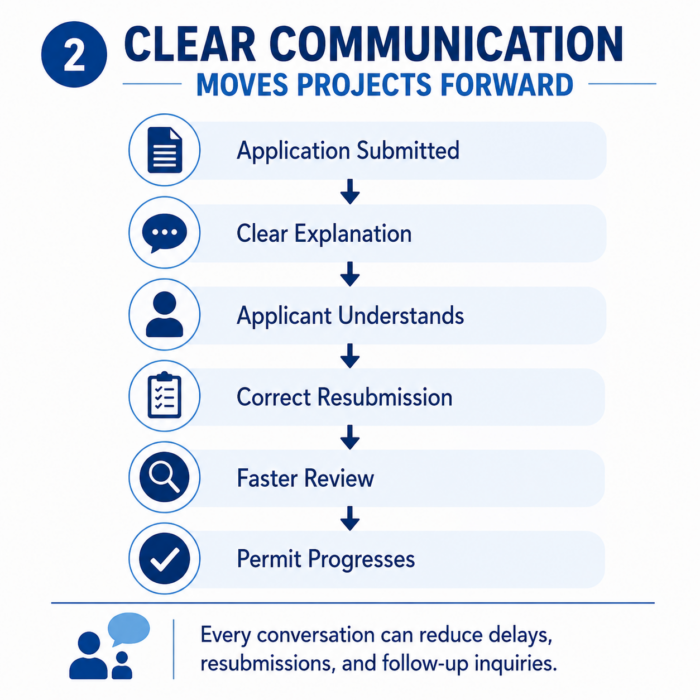
Busy periods tend to expose silos that may not be obvious the rest of the year. Intake staff, plans examiners, and inspectors each focus on different stages of the process. Under pressure, small differences in language or emphasis can grow into confusion, repeat questions, extra time, and frustration for everyone involved. Good customer service does not change the Building Code. It helps applicants understand it and comply with it more efficiently.
Customer service can be thought of as one of the tools in a building official’s toolbox. On its own, a tool isn’t helpful unless we’re confident in when and how to apply it. As the busy season approaches, here are some practical ways to to build and reinforce strong customer service so departments are ready when volumes increase:
Standardize Common Responses
Common permit types, like decks, houses, and sheds, bring predictable questions and deficiencies. Preparing shared language for common issues improves consistency across staff and saves time.Explain “What Happens Next” Every Time
Clear explanations of permit status, outstanding items, and next steps set expectations and reduce follow-up calls. These messages can be built into permitting software and standard letters.Lead With Plain Language, Then Reference the Code
Explaining intent as well as citing Code provisions helps applicants understand requirements and achieve compliance faster.Practise Conversations Ahead of Time
Brief team discussions about how to explain frequent issues or deliver difficult messages help align language before pressure hits.Document Decisions Clearly and Early
Short, clear written summaries reduce misunderstandings and support consistency as files move between roles.Be Proactive About Delays
Silence often makes delays feel worse. Even brief updates help manage expectations and maintain trust.Break the Silos
Applicants hear one “building department” voice, even though multiple roles, and often multiple municipal departments, are involved behind the scenes. Consistent messaging within and between departments helps keep expectations clear.- Treat Customer Service as a Shared Responsibility
Customer service is most effective when it is supported across teams by shared tools, language, and expectations.
Customer service is not separate from the work of a building department. It is part of how files move forward, how expectations are managed, and how trust is maintained during busy periods.
If your department is looking to strengthen communication, reduce repeat questions, and build more consistency across staff, RSM’s Customer Service course is designed to help.
Learn practical strategies your team can apply during peak permit season and beyond.
$519

Laura Elliott
Training Development Manager