

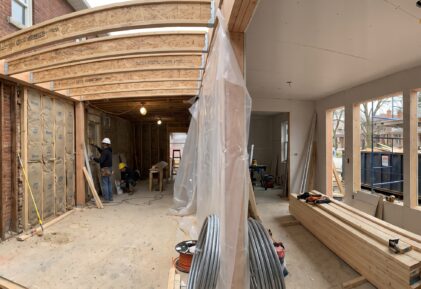
Mastering Part 11 - Panel Session
$363.30
$519
6 CPD Hours
Our subject matter experts work through the full Secondary Suites in Houses course together, one section at a time.
Panel Sessions are built for busy professionals. You get the depth of a live course, on your own schedule. Earn 6 CPD credits without giving up a day to do it.
30% off until November 1st
A Panel Session is recorded separately from our live courses. Subject matter experts work through the curriculum together with no schedule forcing them forward, so each section gets as much coverage as the material needs.
What that looks like:
✔ Requirements discussed the way they come up in an office, with questions, and worked examples
✔ The edge cases that surface when experienced people compare how they would each handle the same file.
✔ Titled sections you can navigate directly, so you can return to a specific topic when you need it.
Module 1: The Path of Compliance
The groundwork for everything after it. You'll see where Parts 10 and 11 come in and how to map a suite project to the right compliance route.
Module 2: New Houses with Secondary Suites
What the OBC now requires when the suite is part of the original build.
Module 3: Renovations to Houses Over 5 Years Old
Adding a suite to an existing house, including the compliance alternatives for egress and fire separations.
Module 4: Renovations to Houses Under 5 Years Old
Newer homes play by different rules. This module covers the alternatives that apply when the house is less than five years old.

✔ Apply the current OBC requirements for secondary suites in new houses
✔ Assess a suite in an existing house using Parts 10 and 11
✔ Pick the right compliance alternative for egress and fire separations
✔ Know which alternatives still apply to homes under five years old
✔ Work through the hazard index and construction index tables with confidence
✔ Use the early warning and evacuation tables on a real suite scenario
Building Officials:
Panel Sessions cover the full course content in the depth needed to work through the applicable requirements with confidence, and you can return to any section when a file calls for it.
BCIN designers:
Every revision request costs your client time and costs you margin. These sessions cover the requirements in enough detail to prepare submissions that move through review cleanly the first time.
Nick Ippolito
Deputy Chief Building OfficialThe RSM Panel Session format is an outstanding resource for professionals seeking to strengthen their knowledge and interpretation of the requirements. The panel format adds a valuable real-world perspective to the learning experience by simulating the types of discussions that commonly occur in a professional office environment. Through the exchange of questions, opinions, and practical experiences among the panel participants, complex concepts are presented in a relatable and engaging manner. Managers should consider recommending their staff complete this course to reinforce critical ideas and concepts as applicable to the subject matter.
✓ 43 lessons you can take in any order, so you can jump straight to the section you need
✓ 4.5 hours of video, broken into short lessons that fit between projects or over lunch
✓ 6 hours of professional development credits toward your annual requirements
✓ Downloadable resources you'll keep using at your desk long after the course ends
✓ Quizzes and activities that check your understanding as you go, not just at the end
No. A Panel Session is recorded separately from the live course and follows a different format entirely. The live course is one instructor delivering a set curriculum to attendees within a fixed schedule. A Panel Session puts four RSM experts through the same course content together, without the time constraint, so each section receives as much coverage as the material warrants.
The result is a longer, more detailed treatment of the same subject matter. If you have taken the live course, a Panel Session covers the areas the schedule required the instructor to move past.
Webinar recordings capture a live presentation as it happened, including the pace and scope of a single session. Panel Sessions are produced specifically as self-directed training, structured into titled sections with a panel of four experts covering the full course curriculum.
The practical differences are depth, structure, and navigability. A Panel Session is organized so you can locate the section covering a specific topic months later without scrubbing through a recording.
Yes. RSM Panel Sessions are eligible for continuing education points toward your OBOA CBCO qualification or other applicable professional certification board. Certificate is issued on completion.
Building officials in Ontario are required to maintain their qualifications through continuing education, and self-directed training is an accepted format. Your certificate of completion is available in your account as soon as you finish the final section, so you can submit it without waiting on us.
You get access to the course content for 45 days. You can watch the sections in any order, stop and resume where you left off, and return to specific sections as often as you need within that period. You will also have access to download the slide deck and all additional resources.
Access extensions may be given upon request.
Yes, group pricing is available for all of our training. For more information and to recieve a quote, please email training@rsmbuildingconsultants.com
Yes. Our live instructor-led courses continue to run on the published schedule, and Panel Sessions are an additional format rather than a replacement. The two formats serve different needs. Live courses offer direct access to the instructor and the ability to ask questions about your own files. Panel Sessions offer more detailed coverage of the curriculum and the flexibility to work through it on your own schedule. Many people take both.
Participants are able to leave questions and comments in each section of the course. You can interact with RSM Training staff and other participants while you work through the content. Questions and comments are closely monitored to ensure you receive a prompt reply.
Do you prefer live training?